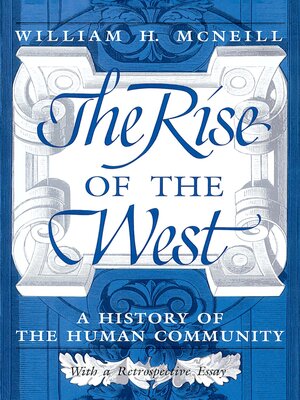
The Rise of the West
ebook ∣ A History of the Human Community

Sign up to save your library
With an OverDrive account, you can save your favorite libraries for at-a-glance information about availability. Find out more about OverDrive accounts.

Find this title in Libby, the library reading app by OverDrive.


Search for a digital library with this title
Title found at these libraries:
| Library Name | Distance |
|---|---|
| Loading... |
WINNER OF THE NATIONAL BOOK AWARD
One of the most important works of history from the twentieth century, The Rise of the West, winner of the National Book Award in 1964, is famous for its ambitious scope and intellectual rigor. In it, William H. McNeill challenges the then-prevalent view that a number of separate civilizations pursued essentially independent careers, and argues instead that human cultures interacted at every stage of their history. McNeill argues instead that from the Neolithic beginnings of grain agriculture to the present major social changes in all parts of the world were triggered by new or newly important foreign stimuli, and he presents a persuasive narrative of world history to support this claim.
In a retrospective essay titled "The Rise of the West after Twenty-five Years," McNeill shows how his book was shaped by the time and place in which it was written (1954-63). He discusses how historiography subsequently developed and suggests how his portrait of the world's past in The Rise of the West should be revised to reflect these changes.