
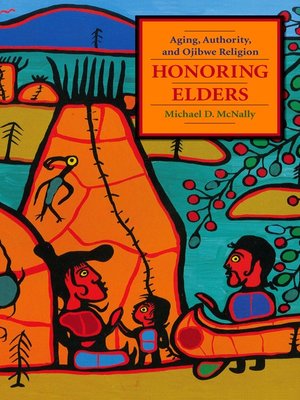
Honoring Elders
ebook ∣ Aging, Authority, and Ojibwe Religion · Religion and American Culture
By Michael D. McNally

Sign up to save your library
With an OverDrive account, you can save your favorite libraries for at-a-glance information about availability. Find out more about OverDrive accounts.
Share



Find this title in Libby, the library reading app by OverDrive.



Search for a digital library with this title
Title found at these libraries:
| Library Name | Distance |
|---|---|
| Loading... |
Like many Native Americans, Ojibwe people esteem the wisdom, authority, and religious significance of old age, but this respect does not come easily or naturally. It is the fruit of hard work, rooted in narrative traditions, moral vision, and ritualized practices of decorum that are comparable in sophistication to those of Confucianism. Even as the dispossession and policies of assimilation have threatened Ojibwe peoplehood and have targeted the traditions and the elders who embody it, Ojibwe and other Anishinaabe communities have been resolute and resourceful in their disciplined respect for elders. Indeed, the challenges of colonization have served to accentuate eldership in new ways.
Using archival and ethnographic research, Michael D. McNally follows the making of Ojibwe eldership, showing that deference to older women and men is part of a fuller moral, aesthetic, and cosmological vision connected to the ongoing circle of lifea tradition of authority that has been crucial to surviving colonization. McNally argues that the tradition of authority and the authority of tradition frame a decidedly indigenous dialectic, eluding analytic frameworks of invented tradition and naïve continuity. Demonstrating the rich possibilities of treating age as a category of analysis, McNally provocatively asserts that the elder belongs alongside the priest, prophet, sage, and other key figures in the study of religion.
Share


