Oxford Handbook of Epicurus and Epicureanism
ebook ∣ Oxford Handbooks

Sign up to save your library
With an OverDrive account, you can save your favorite libraries for at-a-glance information about availability. Find out more about OverDrive accounts.

Find this title in Libby, the library reading app by OverDrive.



Search for a digital library with this title
Title found at these libraries:
| Library Name | Distance |
|---|---|
| Loading... |
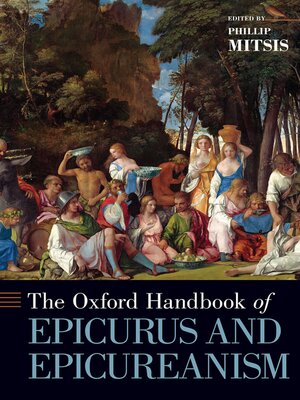
The ancient Greek philosopher Epicurus (341-270 BCE), though often despised for his materialism, hedonism, and denial of the immortality of the soul during many periods of history, has at the same time been a source of inspiration to figures as diverse as Vergil, Hobbes, Thomas Jefferson, and Bentham. This volume offers authoritative discussions of all aspects of Epicurus's philosophy and then traces out some of its most important subsequent influences throughout the Western intellectual tradition. Such a detailed and comprehensive study of Epicureanism is especially timely given the tremendous current revival of interest in Epicurus and his rivals, the Stoics. The thirty-one contributions in this volume offer an unmatched resource for all those wishing to deepen their knowledge of Epicurus' powerful arguments about happiness, death, and the nature of the material world and our place in it. At the same time, his arguments are carefully placed in the context of ancient and subsequent disputes, thus offering readers the opportunity of measuring Epicurean arguments against a wide range of opponents—from Platonists, Aristotelians and Stoics, to Hegel and Nietzsche, and finally on to such important contemporary philosophers as Thomas Nagel and Bernard Williams. The volume offers separate and detailed discussions of two fascinating and ongoing sources of Epicurean arguments, the Herculaneum papyri and the inscription of Diogenes of Oenoanda. Our understanding of Epicureanism is continually being enriched by these new sources of evidence and the contributors to this volume have been able to make use of them in presenting the most current understanding of Epicurus's own views. By the same token, the second half of the volume is devoted to the extraordinary influence of Epicurean doctrines, often either neglected or misunderstood, in literature, political thinking, scientific innovation, personal conceptions of freedom and happiness, and in philosophy generally. Taken together, the contributions in this volume offer the most comprehensive and detailed account of Epicurus and Epicureanism available in English.