Encyclopedia of American Indian Removal
ebook ∣ [2 volumes]

Sign up to save your library
With an OverDrive account, you can save your favorite libraries for at-a-glance information about availability. Find out more about OverDrive accounts.

Find this title in Libby, the library reading app by OverDrive.



Search for a digital library with this title
Title found at these libraries:
| Library Name | Distance |
|---|---|
| Loading... |
This work is a comprehensive encyclopedia of Indian removal that accurately presents the removal process as a political, economic, and tribally complicit affair.
In 1830, Andrew Jackson became the first U.S. president to implement removal of Native Americans with the passage of the Indian Removal Act. Less than a decade later, tens of thousands of Native Americans—Cherokee, Chickasaw, Muscogee-Creek, Seminole, and others—were forcibly moved from their tribal lands to enable settlement by Caucasians of European origin.
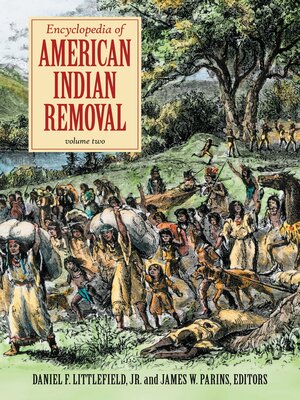
Encyclopedia of American Indian Removal presents a realistic depiction of removal as a complicated process that was deeply affected by political, economic, and tribal factors, rather than the popular romanticized concept of American Indians being herded west by military troops through a trackless wilderness. This work is presented in two volumes. Volume One contains essays on subjects and people that are general in scope and arranged alphabetically by subject; Volume Two is dedicated to primary documents regarding Indian removal and examines specific information about political debates, Indian responses to removal policy, and removals of individual tribes.
In 1830, Andrew Jackson became the first U.S. president to implement removal of Native Americans with the passage of the Indian Removal Act. Less than a decade later, tens of thousands of Native Americans—Cherokee, Chickasaw, Muscogee-Creek, Seminole, and others—were forcibly moved from their tribal lands to enable settlement by Caucasians of European origin.
Encyclopedia of American Indian Removal presents a realistic depiction of removal as a complicated process that was deeply affected by political, economic, and tribal factors, rather than the popular romanticized concept of American Indians being herded west by military troops through a trackless wilderness. This work is presented in two volumes. Volume One contains essays on subjects and people that are general in scope and arranged alphabetically by subject; Volume Two is dedicated to primary documents regarding Indian removal and examines specific information about political debates, Indian responses to removal policy, and removals of individual tribes.