Oduduwa's Chain
ebook ∣ Locations of Culture in the Yoruba-Atlantic

Sign up to save your library
With an OverDrive account, you can save your favorite libraries for at-a-glance information about availability. Find out more about OverDrive accounts.

Find this title in Libby, the library reading app by OverDrive.



Search for a digital library with this title
Title found at these libraries:
| Library Name | Distance |
|---|---|
| Loading... |
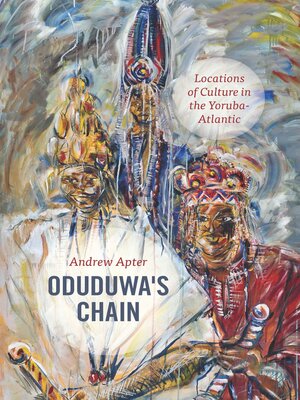
Yoruba culture has been a part of the Americas for centuries, brought from Africa during the transatlantic slave trade and maintained in various forms ever since. In Oduduwa's Chain, Andrew Apter explores a wide range of fascinating historical and ethnographic examples and offers a provocative rethinking of African heritage in Black Atlantic Studies.
Focusing on Yoruba history and culture in Nigeria, Apter applies a generative model of cultural revision that allows him to identify formative Yoruba influences without resorting to the idea that culture and tradition are fixed. For example, Apter shows how the association of African gods with Catholic saints can be seen as a strategy of empowerment, explores historical locations of Yoruba gender ideologies and their variations in the Atlantic world, and much more. He concludes with a rousing call for a return to Africa in studies of the Black Atlantic, resurrecting a critical notion of culture that allows us to transcend Western inventions of African while taking them into account.
Focusing on Yoruba history and culture in Nigeria, Apter applies a generative model of cultural revision that allows him to identify formative Yoruba influences without resorting to the idea that culture and tradition are fixed. For example, Apter shows how the association of African gods with Catholic saints can be seen as a strategy of empowerment, explores historical locations of Yoruba gender ideologies and their variations in the Atlantic world, and much more. He concludes with a rousing call for a return to Africa in studies of the Black Atlantic, resurrecting a critical notion of culture that allows us to transcend Western inventions of African while taking them into account.