Human Rights and the Third World
ebook ∣ Issues and Discourses

Sign up to save your library
With an OverDrive account, you can save your favorite libraries for at-a-glance information about availability. Find out more about OverDrive accounts.

Find this title in Libby, the library reading app by OverDrive.



Search for a digital library with this title
Title found at these libraries:
| Library Name | Distance |
|---|---|
| Loading... |
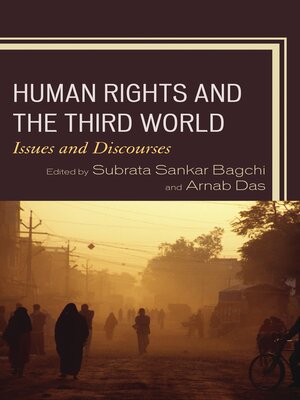
Human Rights and the Third World: Issues and Discourses deals with the controversial questions on the universalistic notions of human rights. It finds Third World perspectives on human rights and seeks to open up a discursive space in the human rights discourse to address unresolved questions, citing issues and problems from different countries in the Third World: 1. Whether alternative perspectives should be taken as the standard for human rights in the Third World countries?
2. Should there be a universalistic notion of rights for Homo sapiens or are we talking about two diametrically opposite trends and standards of human rights for the same species?
3. How far these Third World perspectives of human rights can ensure the protection of the minorities and the vulnerable sections of population, particularly the women and children within the Third World?
4. Can these alternative perspectives help in fighting the Third World problems like poverty, hunger, corruption, despotism, social exclusion like the caste system in India, communalism, and the like?
5. Can there be reconciliation between the Third World perspectives and the Western perspective of human rights?
2. Should there be a universalistic notion of rights for Homo sapiens or are we talking about two diametrically opposite trends and standards of human rights for the same species?
3. How far these Third World perspectives of human rights can ensure the protection of the minorities and the vulnerable sections of population, particularly the women and children within the Third World?
4. Can these alternative perspectives help in fighting the Third World problems like poverty, hunger, corruption, despotism, social exclusion like the caste system in India, communalism, and the like?
5. Can there be reconciliation between the Third World perspectives and the Western perspective of human rights?