2040
audiobook (Unabridged) ∣ Is This the End We Want?

Sign up to save your library
With an OverDrive account, you can save your favorite libraries for at-a-glance information about availability. Find out more about OverDrive accounts.

Find this title in Libby, the library reading app by OverDrive.



Search for a digital library with this title
Title found at these libraries:
| Library Name | Distance |
|---|---|
| Loading... |
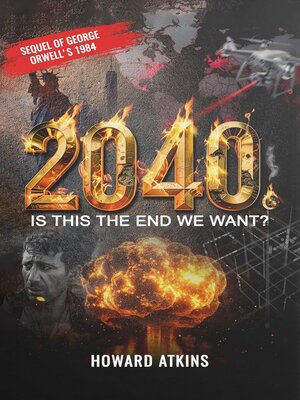
2040 is a dystopian warning and deliberate prequel to the companion novel 2084. Where 2084 explores a future shaped by thoughtful integration between humanity and artificial intelligence, 2040 reveals what happens when power, fear, and unchecked systems determine the path forward instead. This is the future we do not want.
The story traces the years leading to 2040, as democratic institutions erode, surveillance becomes normalized, and technology shifts from innovation to enforcement. Authority tightens. Extremism spreads. Economies fracture. Citizens comply not through force, but through convenience, loyalty, and fear. Freedom survives as language, but disappears in practice.
Artificial intelligence is not the villain here. Like in 2084, it is a tool. The danger lies in who controls it and why. Systems designed to protect become mechanisms that monitor, restrict, and punish. Resistance is reframed as risk.
This book is intentionally unsettling because it is plausible. Its events echo debates already unfolding worldwide. This is the dark trajectory. Read it first.
The possible alternate ending appears in the hopeful companion book: 2084. What if there's another path? Discover it in 2084, where humanity chooses ethics, restraint, and shared responsibility over domination, obedience, and control of its own future at last now.
The story traces the years leading to 2040, as democratic institutions erode, surveillance becomes normalized, and technology shifts from innovation to enforcement. Authority tightens. Extremism spreads. Economies fracture. Citizens comply not through force, but through convenience, loyalty, and fear. Freedom survives as language, but disappears in practice.
Artificial intelligence is not the villain here. Like in 2084, it is a tool. The danger lies in who controls it and why. Systems designed to protect become mechanisms that monitor, restrict, and punish. Resistance is reframed as risk.
This book is intentionally unsettling because it is plausible. Its events echo debates already unfolding worldwide. This is the dark trajectory. Read it first.
The possible alternate ending appears in the hopeful companion book: 2084. What if there's another path? Discover it in 2084, where humanity chooses ethics, restraint, and shared responsibility over domination, obedience, and control of its own future at last now.