
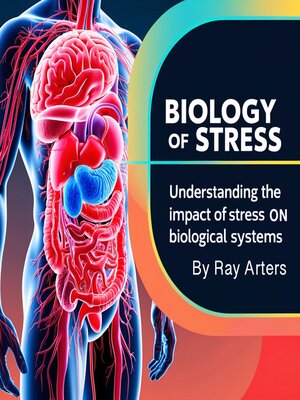
Biology of Stress
audiobook (Unabridged) ∣ Understanding the Impact of Stress on Biological Systems
By Ray Arters

Sign up to save your library
With an OverDrive account, you can save your favorite libraries for at-a-glance information about availability. Find out more about OverDrive accounts.
Share



Find this title in Libby, the library reading app by OverDrive.



Search for a digital library with this title
Title found at these libraries:
| Library Name | Distance |
|---|---|
| Loading... |
This audiobook is narrated by a digital voice.
Stress represents one of the most universal and fundamental biological responses found across all living organisms, from the simplest bacteria to the most complex mammals. This sophisticated adaptive mechanism enables organisms to detect, respond to, and survive environmental challenges that threaten their survival and well-being. Understanding stress biology requires recognizing that stress responses, while often perceived negatively in modern human contexts, evolved as essential survival mechanisms that have enabled life to persist and thrive across billions of years of evolutionary history.
The concept of stress in biology encompasses any condition that disturbs the normal physiological equilibrium of an organism, triggering compensatory responses designed to restore balance and ensure survival. This disturbance, known as a stressor, can be physical, chemical, biological, or psychological in nature, ranging from temperature extremes and toxin exposure to predator encounters and social conflicts. The stress response itself involves a complex cascade of molecular, cellular, and systemic changes that mobilize energy resources, enhance defensive capabilities, and optimize survival chances under challenging conditions.
Homeostasis serves as the fundamental principle underlying stress biology, representing the tendency of biological systems to maintain stable internal conditions despite external perturbations. This dynamic equilibrium involves continuous monitoring of internal and external environments through sophisticated sensing systems that detect deviations from optimal conditions. When stressors threaten homeostatic balance, stress response systems activate to counteract these threats and restore stability. The effectiveness of these homeostatic mechanisms often determines an organism's ability to survive and reproduce under adverse conditions.
Share


