The Malayan Emergency in Film, Literature and Art
ebook ∣ Cultural Memory as Historical Other

Sign up to save your library
With an OverDrive account, you can save your favorite libraries for at-a-glance information about availability. Find out more about OverDrive accounts.

Find this title in Libby, the library reading app by OverDrive.



Search for a digital library with this title
Title found at these libraries:
| Library Name | Distance |
|---|---|
| Loading... |
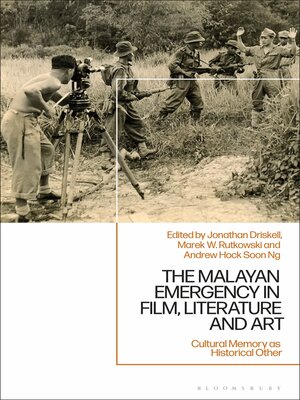
Examining film, literature and art produced during and after the Malayan Emergency, the guerrilla war fought between the Malayan National Liberation Army and the military forces of the British Commonwealth, this collection demonstrates how art functions as a record of cultural memory that both reinforces and challenges official histories. Beyond that, it also brings new understandings of the Malayan Emergency itself, and Malaysia's subsequent development as a postcolonial nation.
The first section of the book focuses on films and writings produced during the period of the Emergency to capture the socio-political circumstances of the time and understand its effect on the people. The second section goes on to explore representations of the Emergency generated after the event, highlighting how it was reimagined or reevaluated by later artists, and what ideological ends they served. Offering a comparative methodological approach, it investigates works that account for a range of perspectives, including British, Communist and Malayan/Malaysian. Bringing together the personal and political within individual and collective histories, this collection offers a new understanding of how the Emergency contributed to the formation of postcolonial Malaysia, and demonstrates the central role that film, literature and art play in the creation of cultural memory.
The first section of the book focuses on films and writings produced during the period of the Emergency to capture the socio-political circumstances of the time and understand its effect on the people. The second section goes on to explore representations of the Emergency generated after the event, highlighting how it was reimagined or reevaluated by later artists, and what ideological ends they served. Offering a comparative methodological approach, it investigates works that account for a range of perspectives, including British, Communist and Malayan/Malaysian. Bringing together the personal and political within individual and collective histories, this collection offers a new understanding of how the Emergency contributed to the formation of postcolonial Malaysia, and demonstrates the central role that film, literature and art play in the creation of cultural memory.