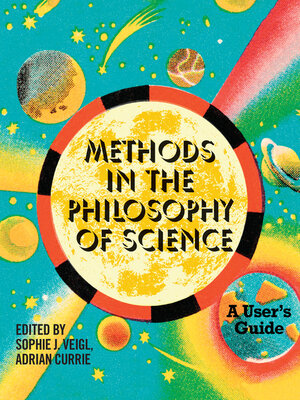
Methods in the Philosophy of Science
ebook ∣ A User's Guide

Sign up to save your library
With an OverDrive account, you can save your favorite libraries for at-a-glance information about availability. Find out more about OverDrive accounts.

Find this title in Libby, the library reading app by OverDrive.



Search for a digital library with this title
Title found at these libraries:
| Library Name | Distance |
|---|---|
| Loading... |
A guidebook to methods and methodology, encouraging deeper engagement across the philosophy of science and beyond.
The last twenty years have seen multiple methodological revolutions in the philosophy of science: There has been increased diversity concerning the questions asked, who asks those questions, who the relevant audiences are, and what the techniques and tools involved are. In Methods in the Philosophy of Science: A User’s Guide, Sophie Veigl and Adrian Currie introduce this range of methods through both practical advice and philosophical reflection. Each chapter introduces the reader to a method or set of methods in the philosophy of science, discusses its advantages and limitations, and provides practical guidance on how to learn skills relevant to applying the method.
The volume fulfills several critical roles. First, by introducing and discussing methods in the philosophy of science, the collection increases philosophers' awareness of methodological options—of particular importance for younger scholars who are often not exposed to the diversity of practice. Second, the collection's practical focus will aid established philosophers in diversifying their own methodological toolkits. Third, collecting this diversity serves as a ground for philosophical reflection on what we, as philosophers, take ourselves to be capable of. Fourth, the collection hopes to increase interdisciplinary links between philosophy and other fields by laying clear the methodological continuity and complement between them.
The last twenty years have seen multiple methodological revolutions in the philosophy of science: There has been increased diversity concerning the questions asked, who asks those questions, who the relevant audiences are, and what the techniques and tools involved are. In Methods in the Philosophy of Science: A User’s Guide, Sophie Veigl and Adrian Currie introduce this range of methods through both practical advice and philosophical reflection. Each chapter introduces the reader to a method or set of methods in the philosophy of science, discusses its advantages and limitations, and provides practical guidance on how to learn skills relevant to applying the method.
The volume fulfills several critical roles. First, by introducing and discussing methods in the philosophy of science, the collection increases philosophers' awareness of methodological options—of particular importance for younger scholars who are often not exposed to the diversity of practice. Second, the collection's practical focus will aid established philosophers in diversifying their own methodological toolkits. Third, collecting this diversity serves as a ground for philosophical reflection on what we, as philosophers, take ourselves to be capable of. Fourth, the collection hopes to increase interdisciplinary links between philosophy and other fields by laying clear the methodological continuity and complement between them.