The Carbon Footprint of our Primary Energy Sources
ebook

Sign up to save your library
With an OverDrive account, you can save your favorite libraries for at-a-glance information about availability. Find out more about OverDrive accounts.

Find this title in Libby, the library reading app by OverDrive.



Search for a digital library with this title
Title found at these libraries:
| Library Name | Distance |
|---|---|
| Loading... |
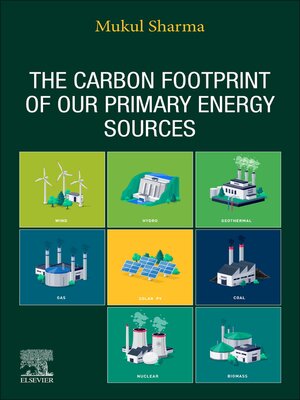
The Carbon Footprint of our Primary Energy Sources supplies readers with a comprehensive, accessible analysis of the carbon footprints of a range of primary energy sources including crude oil, natural gas, coal, solar energy, wind energy, geothermal energy, hydroelectric energy and nuclear energy, and biofuels, and their carbon footprints, employing a full lifecycle assessment (LCA) of each primary energy source. It furnishes both the foundation and a tool for estimating carbon footprints for a range of energy systems. The work culminates in a cost-benefit analysis of these primary energy sources.With the significant uptick of global investment in alternative energies and the global focus on reducing emissions, this text delivers an important foundational overview/understanding of these systems, and an opportunity for teachers and readers to apply learnings to their own energy consumption choices. - Presents foundational information about various energy systems and quantifies their carbon footprint
- Raises awareness among readers of their energy consumption and the primary sources of carbon emissions
- Equips policy makers and engineers with the tools to calculate the carbon footprint of various energy sources
- Empowers readers to make informed energy decisions that support the reduction of carbon emissions
- Discusses the technologies, options and costs of energy storage for intermittent sources of energy
- Presents the costs of carbon capture, sequestration and utilization and its impact on energy prices for the consumer
- Summarizes valuable "lessons learnt" from our energy policy and choices over the past two decades